4 Tips to Better Understand Poland’s Food and Drink

Poland, one of Europe’s largest and most populous countries, boasts a rich and turbulent history. It’s bordered by seven countries, including Germany, Ukraine, and Russia, plus the Baltic Sea.
It also has a rich cuisine, known for hearty comfort food like pierogi (dumplings), kielbasa (smoked sausage), potato pancakes, and bigos (hunter's stew). As with many countries in Northern and Central Europe, vodka is the country’s national spirit, although many types of alcohol are available.
But the cuisine holds some interesting surprises that you won’t find in guidebooks. These fun facts will enrich your knowledge and give you a deeper understanding of the country. Here are four tips to better understand Poland’s food and drink.
1. Krakow’s Street Food is NOT a Bagel or a Pretzel
Krakow, in southern Poland, is known for its street bread rings called obwarzaneks (literally, “to put in boiling water”). More than 100 street vendors sell thousands of the doughy treats a day throughout the city and environs. They are made by hand and flavored with poppy seeds, sesame seeds, multigrains, or salt. Some people call them bagels; others call them pretzels because of their twisted shape.
Please don’t! Locals hate that. Obwarzaneks are thinner than a bagel, with a larger hole, and are never cut to be used as a sandwich. And they definitely don’t taste like a pretzel.

2. Your Imported Polish Vodka May Be Missing an Essential Ingredient

Poland, the biggest producer of vodka in the European Union, takes its vodka very seriously. Not all vodka made in Poland can earn the distinction of “Polish Vodka,” which is protected by law. To meet the registered trademark, the alcohol content must be at least 37.5 percent; only one of five ingredients – wheat, rye, barley, oats, or potato – can be used as the base; and the production must be on Polish soil. Polish vodka is highly regarded and widely available.
But not all Polish vodka can be exported in its authentic form. Bison grass vodka, also known as Żubrówka, is a traditional herbal rye-based vodka infused with bison grass from the forests of eastern Poland. Its signature feature is a long blade of bison grass contained in every bottle. You can find this popular vodka all over Europe.
But you won’t find the real deal in the United States. The Food and Drug Administration has banned bison grass for decades because it contains coumarin, a blood thinner that can damage the liver in large amounts. You can find reformulated versions flavored to replicate the herbal taste in the United States, but they’re not the original and won’t contain the iconic grass blade.
3. Polish Wine is Trending Up
The three most popular alcoholic drinks in Poland are vodka, beer, and mead.

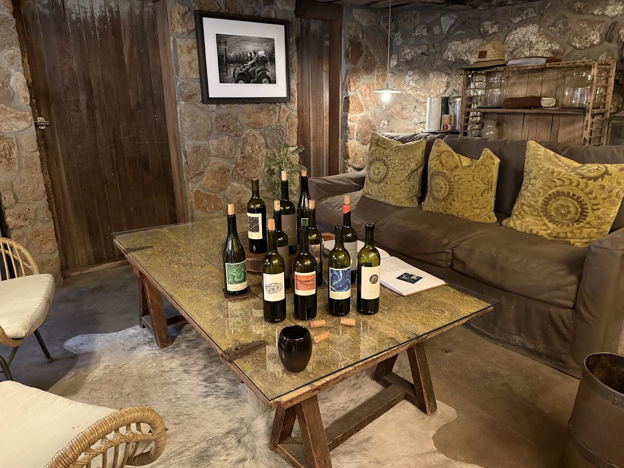
But Polish wine, which suffered a downturn in the 20th Century, is undergoing a renaissance, in part because climate change has made it easier to grow grapes this far north. The number of registered wineries in the country has jumped from about 200 in 2019 to more than 700 in 2026. Most of them are tiny boutique wineries. You’ll find classic favorites like Riesling and Pinot Noir, as well as regional white varietals like Solaris and Johanniter, and reds such as Regent and Rondo.
While the wine industry is still relatively young, the Polish wines I sampled were very tasty and of high quality. The Michelin Guide even recently noted that the future of Polish wine is “undeniably exciting.” I recommend you try it!
4. Poland Has a New Favorite Dessert
The guidebooks will tell you that Poland’s traditional desserts include sweet donuts with rose hip jam and apple pie.
But the locals’ current beloved dessert is “kremowka papieska,” also known as papal cream cake or John Paul II cream cake. It’s named in honor of Pope John Paul II, the only pope originally from Poland, who served from 1978 until his death in 2005.
Evidently, when he returned to his hometown of Wadowice for a visit in 1999, he related how this cream cake, similar to a French Napoleon, was his favorite when he was a boy. He also stated that at the end of high school in 1938 he and his buddies had themselves a big cake-eating contest with this cake (according to Tomasz, our local guide who introduced us to this treat, the Pope came in second). The cake quickly soared in popularity and remains a favorite today.

We hope these four tips to better understand Poland’s food and drink make you feel more like an insider. Sto lat! (“100 years!” is one way to toast in Polish.)
Do you have any additional fun facts to add about Poland’s food and drink? Please let us know! We’re at info@winewithourfamily.com.
If you enjoyed this post, visit our website and take a look at some of our related articles: